Most of us don’t notice it happening. An hour turns into three. A meeting runs long. A deadline keeps you glued to the screen. And somewhere in between, your body has been sitting in the exact same position for far longer than it should. Here are some simple movements to add to your routine — no mat, no equipment, just your office chair.
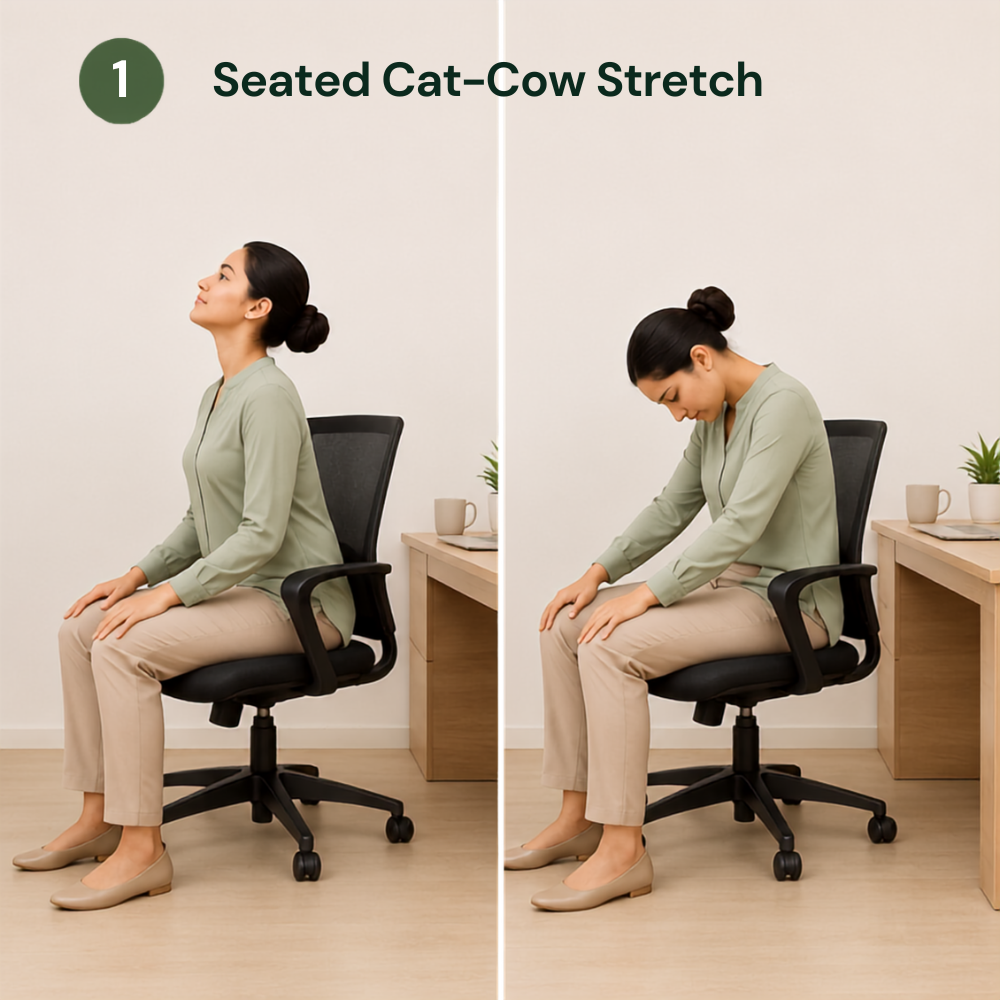
1. Seated Cat-Cow Stretch
Sit upright with your hands resting on your knees. As you inhale, arch your back gently and lift your chest. As you exhale, round your spine and drop your chin toward your chest. Move slowly between the two for 8–10 rounds.
Why It May Help: This movement mobilises the entire spine and can ease the stiffness that builds up from sitting in one fixed posture for long stretches.
Expert Tip: Let your breath lead the movement — inhale as you open, exhale as you round. The slower you go, the more the spine benefits.
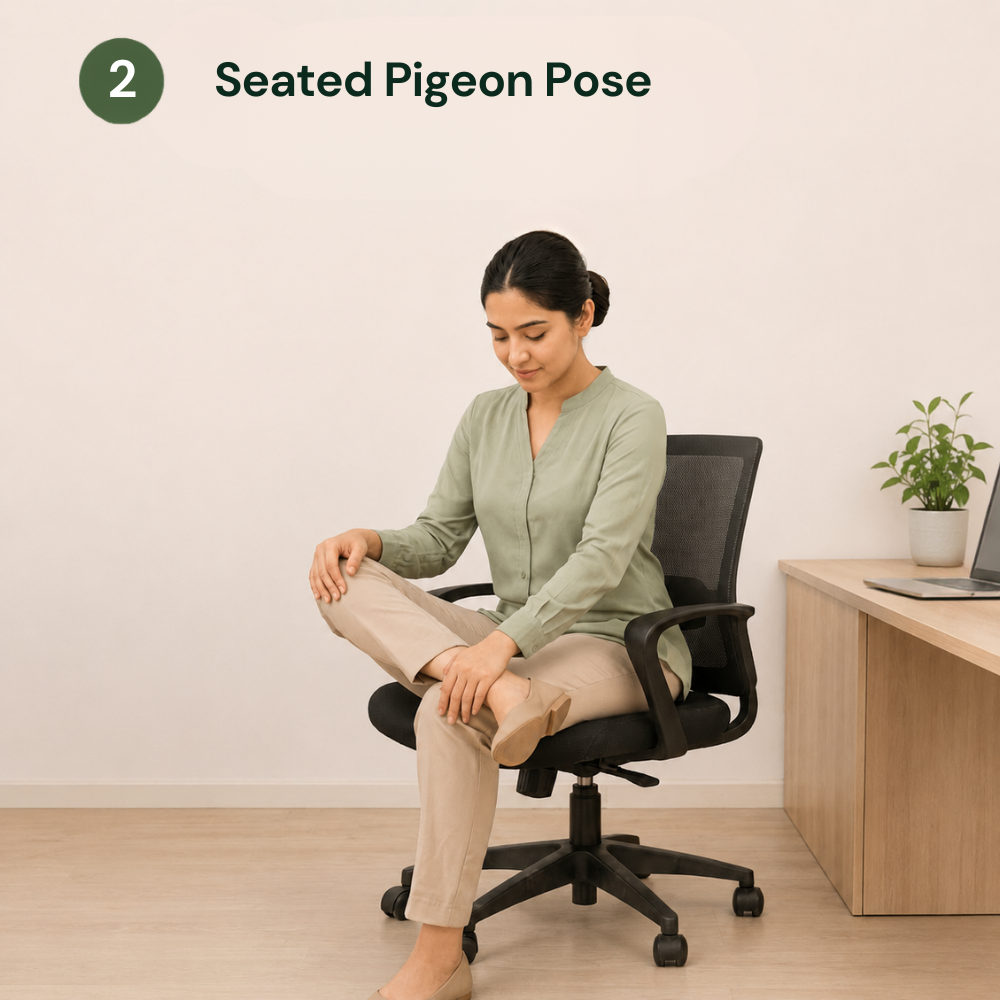
2. Chair Pigeon (Hip Opener)
Sit tall and cross one ankle over the opposite knee, forming a figure-4 shape. Gently hinge forward from the hips until you feel a stretch in the outer hip and glute. Hold for 15–20 seconds, then switch sides.
Why It May Help: Hips tend to tighten from prolonged sitting, which can affect posture and even contribute to lower back discomfort.
Expert Tip: Keep your spine long as you hinge forward — the stretch should come from the hip, not from rounding your back.
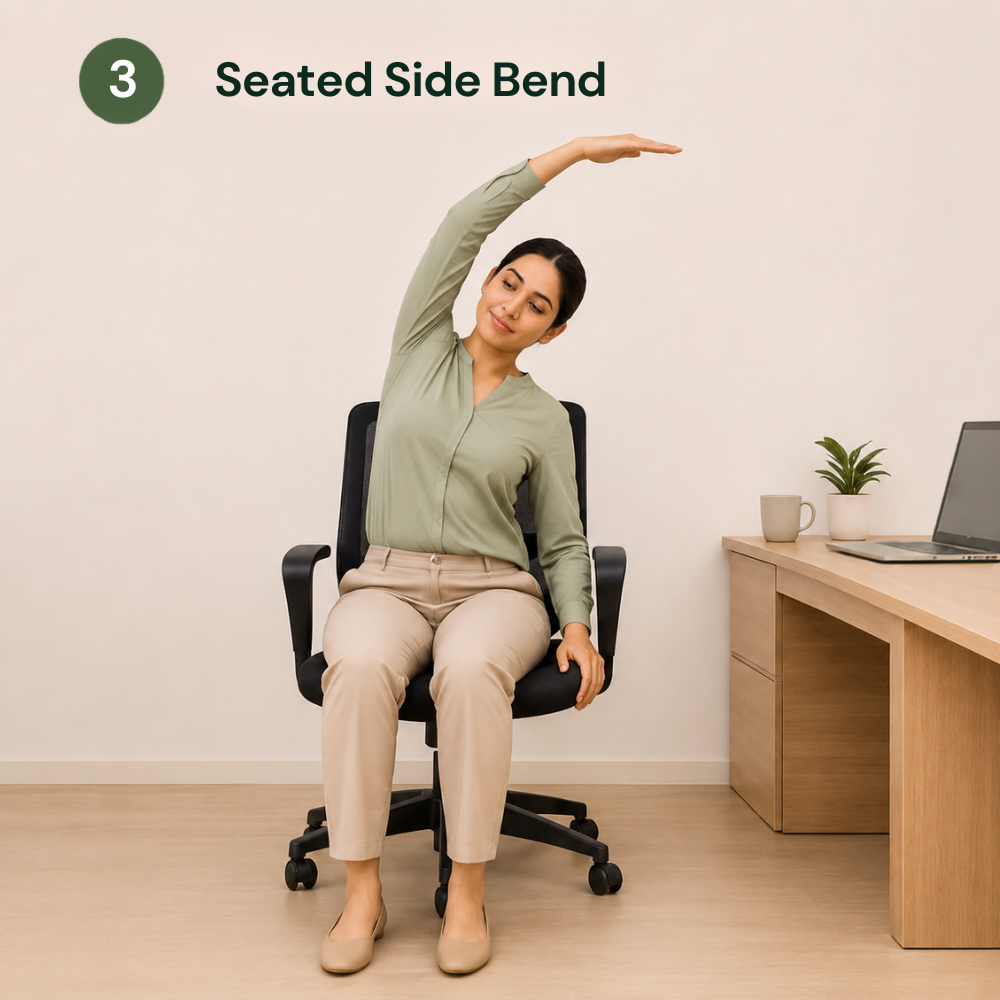
3. Seated Side Bend
Sit upright with feet flat on the floor. Raise one arm overhead and gently lean your torso to the opposite side, feeling a stretch along your ribs and waist. Hold for 15 seconds, then switch sides.
Why It May Help: This opens up the side body and ribcage, which can feel compressed after hours of hunching toward a screen.
Expert Tip: Keep both hips grounded on the seat — the stretch should stay in the side body, not the lower back.
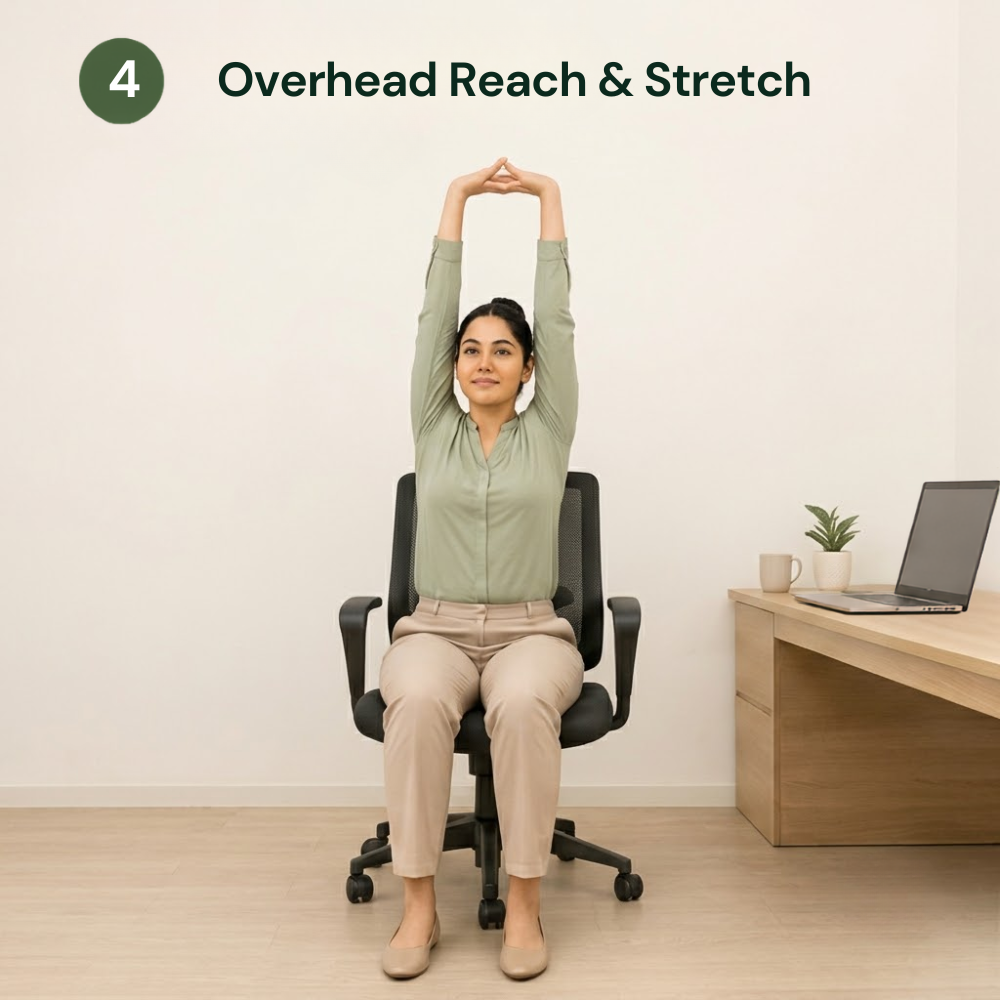
4. Overhead Reach & Stretch
Interlace your fingers and stretch both arms straight overhead, palms facing up. Lengthen through your spine as if someone is gently pulling you upward. Hold for 10–15 seconds, breathing steadily.
Why It May Help: A simple way to counter the forward-hunched posture that builds up during long screen hours, while also waking up sluggish energy.
Expert Tip: Keep your shoulders relaxed away from your ears — the reach should come from the ribcage, not from tensing the neck.
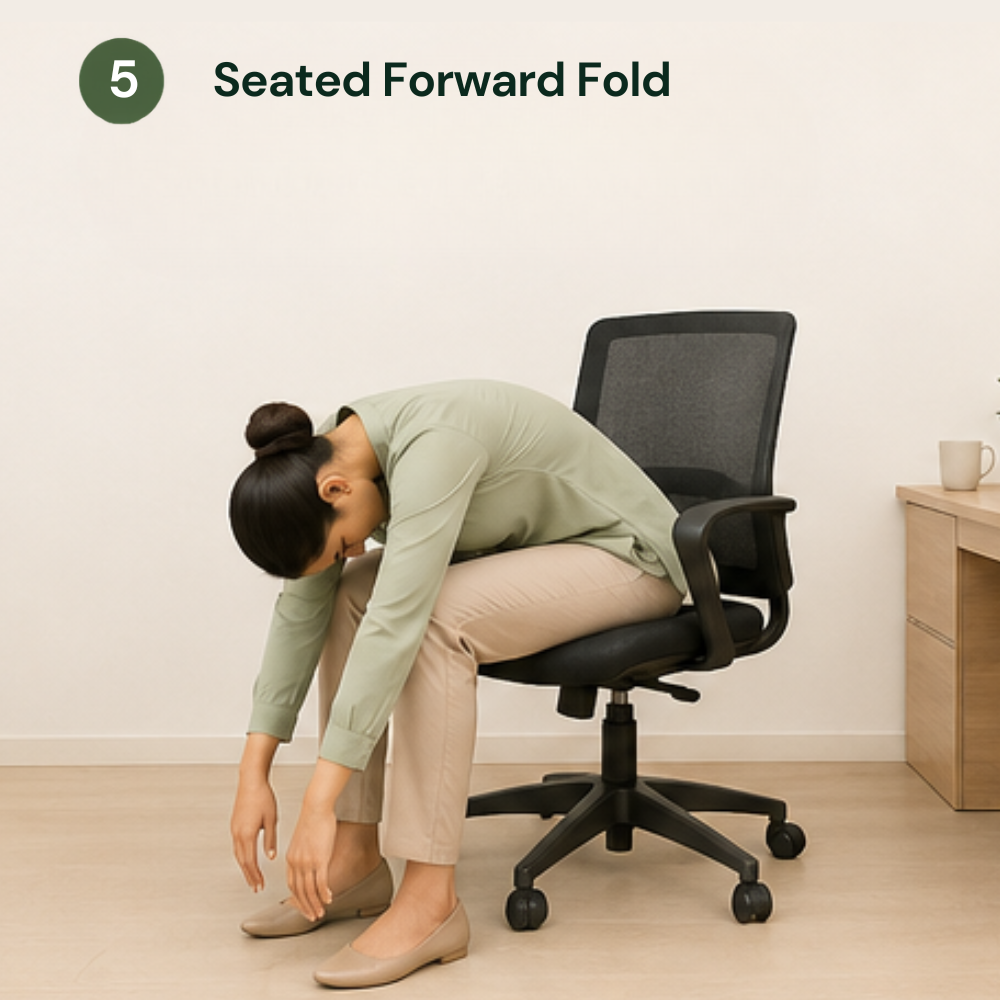
5. Seated Forward Fold
Sit toward the edge of your chair with feet hip-width apart. Slowly hinge forward from the hips, letting your upper body relax toward your thighs and your arms hang loose. Hold for 15–20 seconds, then roll back up slowly.
Why It May Help: This gently stretches the lower back and backs of the legs, and can help release tension built up from sitting for extended periods.
Expert Tip: Bend your knees slightly if you feel any pull behind them — the goal is a gentle release, not a deep stretch.
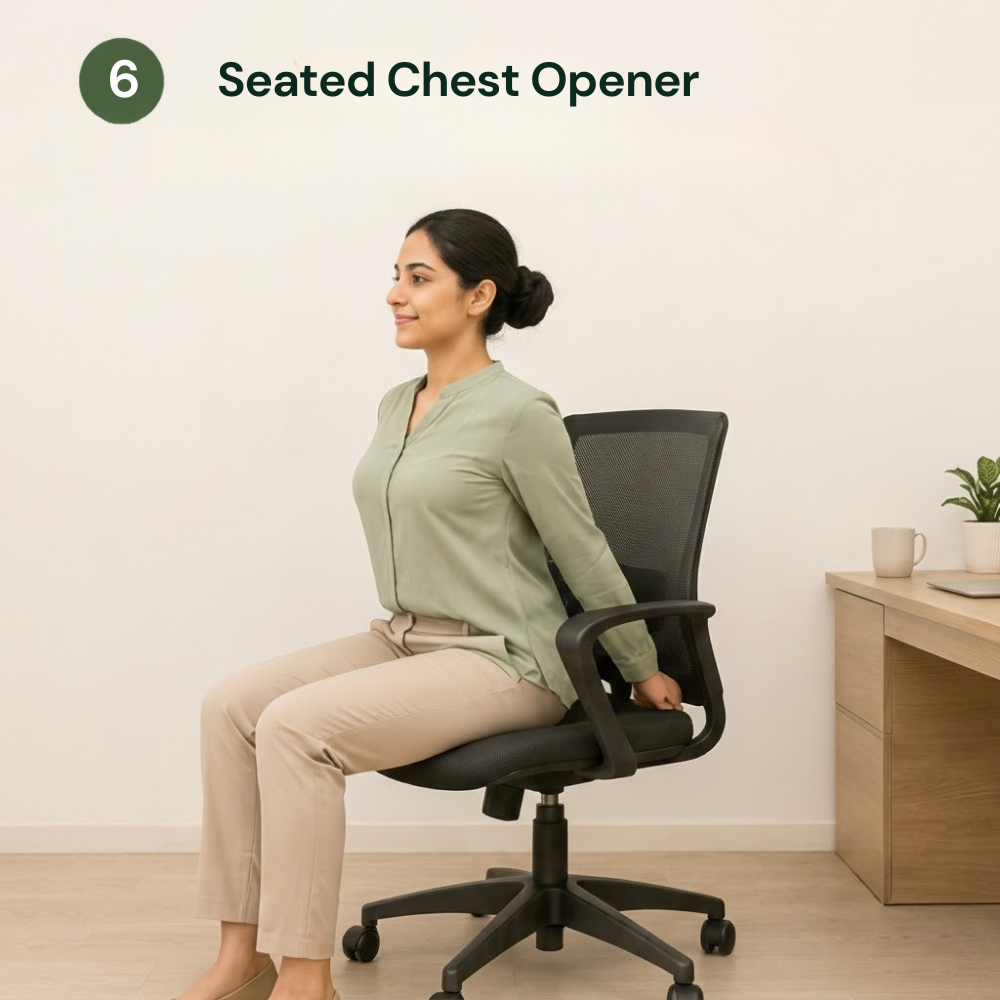
6. Chest Opener (Shoulder Blade Squeeze)
Sit upright, reach both arms behind your lower back and gently clasp your hands (or hold your chair’s backrest). Hold for 10–15 seconds.
Why It May Help: Counters the forward-rounded shoulder posture that often develops from typing and screen work.
Expert Tip: Keep your chin level and avoid arching your lower back — the lift should come from the chest, not the spine.
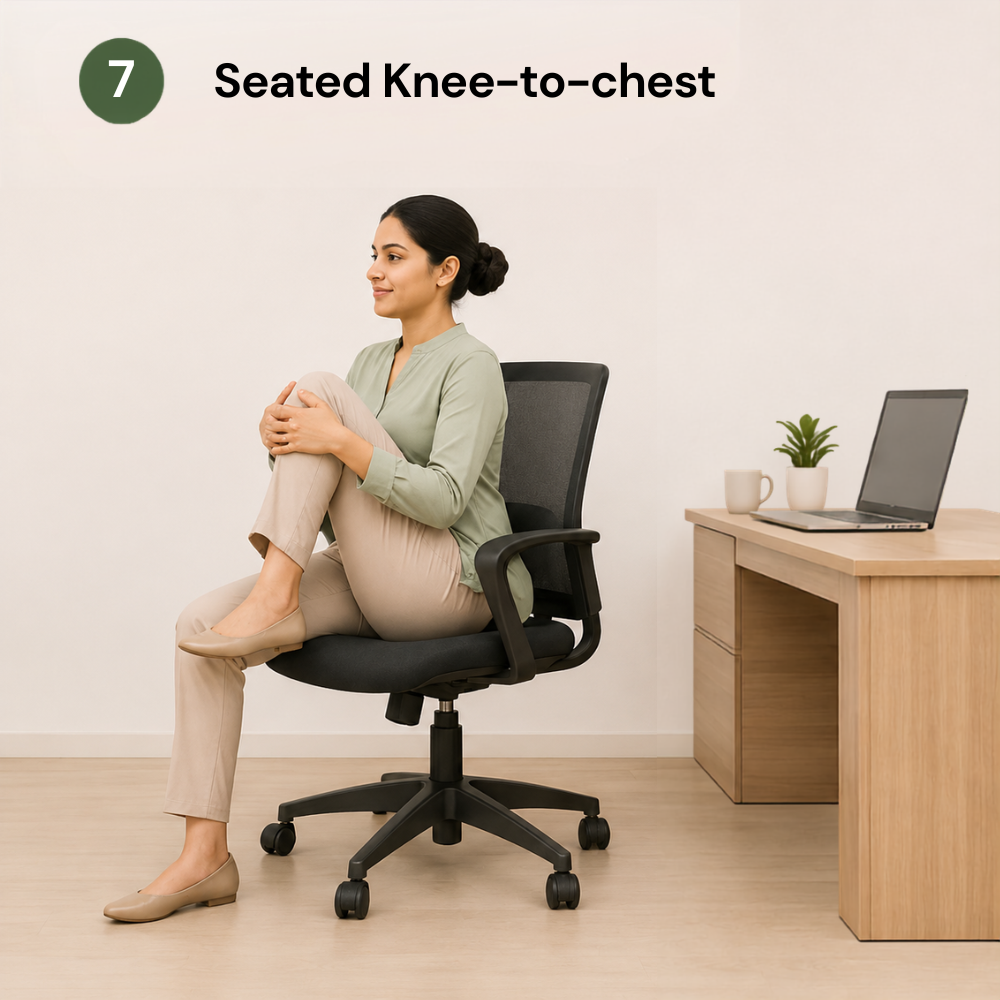
7. Seated Knee-to-Chest (Hip Flexor Release)
Sit upright and gently draw one knee toward your chest, holding it with both hands. Keep your spine tall rather than rounding forward. Hold for 15 seconds, then switch legs
Why It May Help: Long hours of sitting can shorten the hip flexors over time; this stretch helps release that tightness.
Expert Tip: Avoid pulling forcefully — let the knee come toward you gently and stop where you feel a comfortable stretch.
Small Daily Habits Worth Building
Beyond these seven stretches, a few small daily habits can go a long way in supporting your body through a desk-heavy routine:
- Set a reminder to stand up and move for two minutes every hour.
- Keep a water bottle at your desk and sip through the day — dehydration adds to fatigue and stiffness.
- Take calls standing up or walking around when possible.
- Blink consciously and look away from your screen every 20 minutes to rest your eyes.
- Check your posture periodically — feet flat, back supported, screen at eye level.
- End your day with a few slow, deep breaths before switching off work mode.
None of these need extra time in your day. They simply need a little awareness, repeated consistently.
More on HealThyRam TV
For a guided, follow-along version of chair stretches and other simple wellness practices, watch our wellness expert Yogacharya Dhakaram sessions on HealThyRam TV. It’s a good way to see the correct form and pace for these movements before making them a habit.
Ready for a Routine Built Around You
These stretches are just the surface. Our yoga experts, including Yogacharya Dhakaram, use dozens of small corrections and sequencing tricks that never make it into a blog post — the kind of guidance that turns “doing yoga” into “doing yoga right.” Book a live consultation at HealThyRam.com and get access to the guidance you can’t get from a screen.
Namaste